Research
Text recognition models

The Hanse.Quelle.Lesen! project is a collaboration between the Research Centre for Hanse and Baltic History (FGHO), based at the European Hansemuseum Lübeck, and the Archive of the Hanseatic City of Lübeck. Launched in 2020, the initiative aims to digitise the Hanserezesse (official meeting minutes of Hanse towns) and other Hanseatic records from the 14th to 17th centuries. By converting these handwritten records into searchable text with the help of Citizen Science, the project seeks to make the political and economic world of the German Hanse accessible to both professional researchers and the general public.
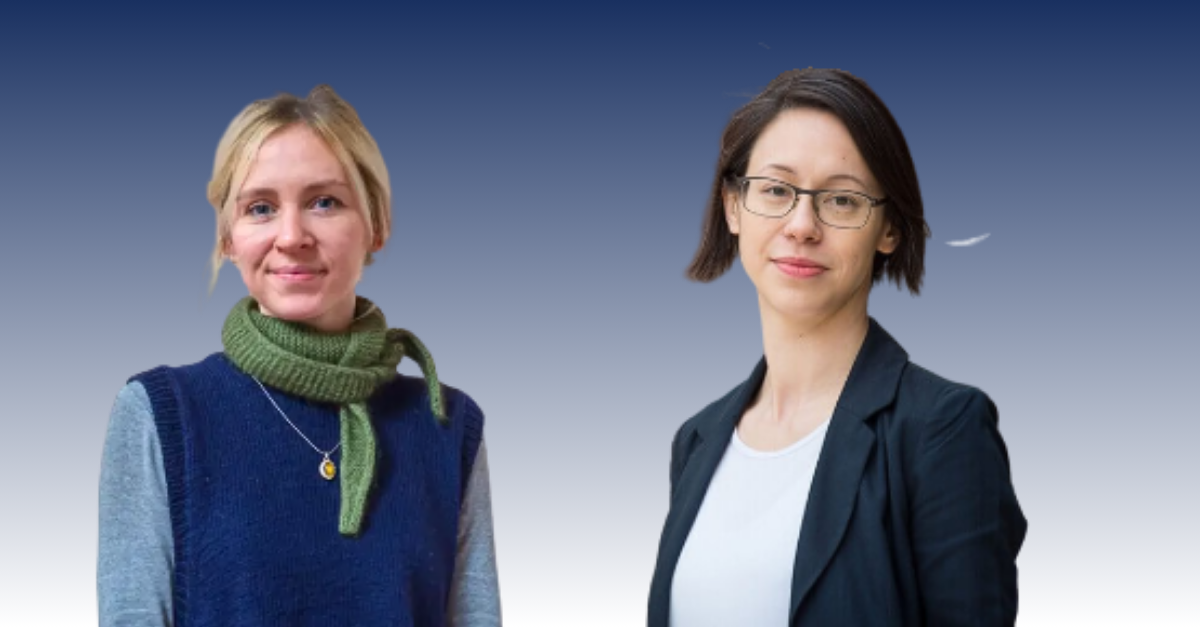 Manuela Nitsch, Citizen Science Manager at the FGHO and Dr Angela Huang, Head of the FGHO. © Olaf Malzahn
While modern AI has the potential to "read" historical documents and transcribe them at scale, it cannot do so accurately without a foundation of high-quality training data, known as Ground Truth. The project faced a massive volume of archival material: thousands of pages of complex legal and trade records written in Middle Low German and early modern scripts such as Kurrent. Depending on the complexity of the handwriting, each page takes around an hour for a trained paleographer to decipher manually.
When the project started back in 2017, far fewer public models were available, particularly for Middle Low German.“Initially, we wanted to access [the documents] ourselves using AI, but we didn't get very far because you always have to create your own training data first [...]. Then the idea arose to do it together with the public,” - Angela Huang, head of the FGHO
To use volunteers for manual transcription, the team needed a platform that was easy to navigate, regardless of a user's technical experience. Since many volunteers work from home, the project also required a centralised, web-based hub accessible from anywhere.
%20Europ%C3%A4isches%20Hansemuseum_Nadine%20Sommer%20(9).jpg?width=8192&height=5464&name=Hanse.Quelle.Lesen.%2024.April%202026%20(c)%20Europ%C3%A4isches%20Hansemuseum_Nadine%20Sommer%20(9).jpg) The FGHO decided to use volunteers to manually transcribe documents and create Ground Truth data to train AI text recognition models. © Nadine Sommer
The FGHO decided to use volunteers to manually transcribe documents and create Ground Truth data to train AI text recognition models. © Nadine Sommer
The project team selected Transkribus as the ideal solution because it integrates the entire workflow into a single, user-friendly interface. The team could use the platform not only to create Ground Truth but also to train AI models directly, without the need to move data between different systems.
Transkribus’ intuitive design enabled citizen scientists to perform the essential task of manually transcribing documents. The web-based platform made it easy for volunteers to access and transcribe documents, even from the comfort of their own homes.
“When new citizen scientists join the project we’ll meet with them one-to-one online to give them basic information about the project and how to use Transkribus. Since many of our volunteers are older or not as well-practiced with digital tools, a changed user interface, for example, can cause confusion. So I also explain new Transkribus features or changes during our weekly meetings,” - Manuela Nitsch, Citizen Science Manager, FGHO
Once the pages have been transcribed by the volunteers, the data is used within Transkribus to train custom text recognition models capable of reading the specific handwriting used in the Hanseatic documents. As more Ground Truth is created, these models can then be retrained to improve their accuracy.
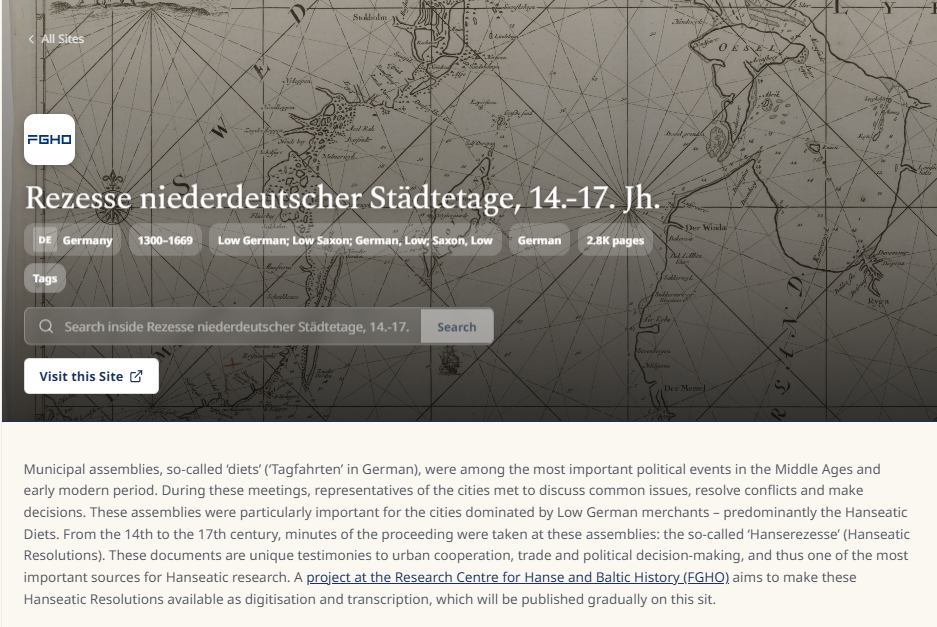 The transcribed documents are uploaded onto the team's Transkribus Site, making them digitally accessible to the general public. © Transkribus
Using Transkribus had four key benefits for the project:
%20Europ%C3%A4isches%20Hansemuseum_Nadine%20Sommer%20(8).jpg?width=8192&height=5464&name=Hanse.Quelle.Lesen.%2024.April%202026%20(c)%20Europ%C3%A4isches%20Hansemuseum_Nadine%20Sommer%20(8).jpg) Volunteers such as Kristina Russ attend weekly online meetings, where they are updated on the project and the Transkribus platform. © Nadine Sommer
Volunteers such as Kristina Russ attend weekly online meetings, where they are updated on the project and the Transkribus platform. © Nadine Sommer
The Hanse.Quelle.Lesen! project demonstrates that the "bottleneck" of manual transcription is not a barrier, but an opportunity for engagement. By combining the technical power of Transkribus with the dedication of the public, the FGHO has turned inaccessible historical records into a truly accessible digital archive. This collaboration proves that when people have the right tools and institutional support, they don't just help process data; they become an integral part of preserving it for the future.
Transkribus has been used by archives and research institutions around the world to engage volunteers in historical research. If you want to find out more about how Transkribus could benefit your Citizen Science project, book a consultation with our advisors and get tailored advice on workflow design, model selection, and custom plans.