Research
Text recognition models
.png?width=1280&height=720&name=Featured%20Image%20(12).png)

Text recognition and AI are quickly becoming essential tools for historians, offering powerful ways to study, process, and access huge collections of archival material. To make sure the next generation of researchers is ready for this digital future, many universities are now adding these methods to their courses, teaching students how to use digital collections and automatic text recognition with historical sources.
The University of Helsinki is a great example of an institution that is embracing this change. Researcher Ville-Pekka Kääriäinen, a historian and postdoctoral researcher at the university, has been leading the way by teaching students how to use Transkribus. We spoke with him to get more information about his own research journey, why he set up the course, and what it’s like teaching Transkribus to a diverse group of students and scholars.
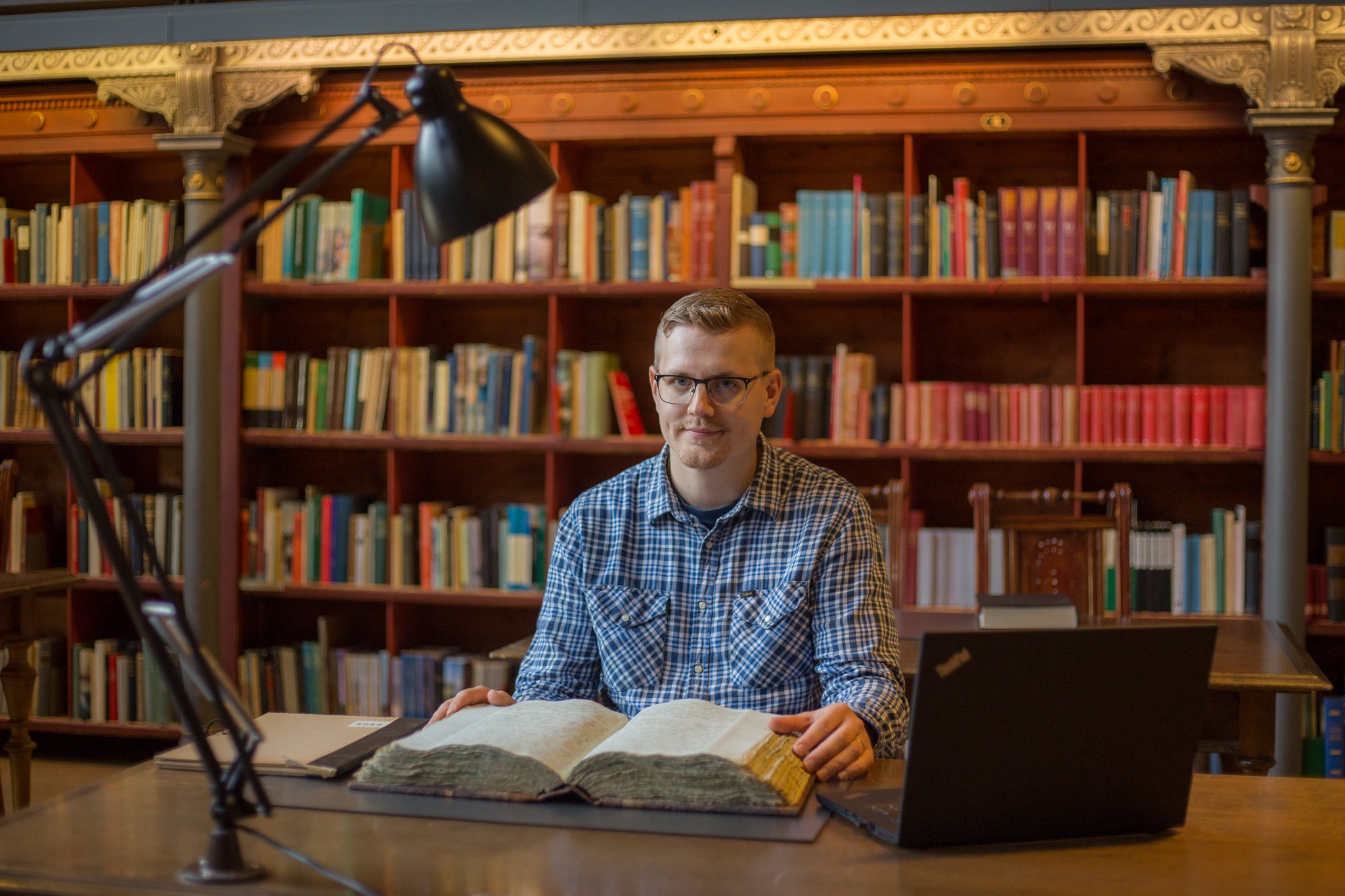 Ville-Pekka first discovered Transkribus while working at the Finnish National Archives. © Ville-Pekka Kääriäinen
Ville-Pekka has been with Transkribus since the beginning. “I became familiar with Transkribus while working for the Finnish National Archives through the READ project for about a year in 2019.” It was this involvement that inspired him to use the technology for his doctoral dissertation, entitled “Imagined Periphery: State Formation, Resistance, and Violence in the Parish of Iisalmi, 1639–1699”. This research focused on state formation in Iisalmi, Eastern Finland, and on how historiographical ideas of inherent regional differences — often rooted in Finnish “tribal” thinking — have shaped interpretations of this process. By transcribing 17th-century court records, Ville-Pekka was able to challenge these assumptions, showing that earlier research had “exaggerated regional differences, especially in general histories where Eastern Finland is portrayed as a wild periphery in which the Crown’s authority was supposedly absent due to long distances.”
Transkribus helped this research in two ways. First, it greatly sped up the transcription of Ville-Pekka’s 17th-century primary sources. "When I began my project, there were no ready-made models for 17th-century Swedish sources, so I had to develop my own workflow from scratch," he recalled. But he also used the search functions on his secondary sources, such as allmogens besvär (Complaints of the Common People) and Count Per Brahe's correspondence, enabling him to quickly locate information related to his research area.
You can view Ville-Pekka's model for 17th-century Swedish handwriting here.
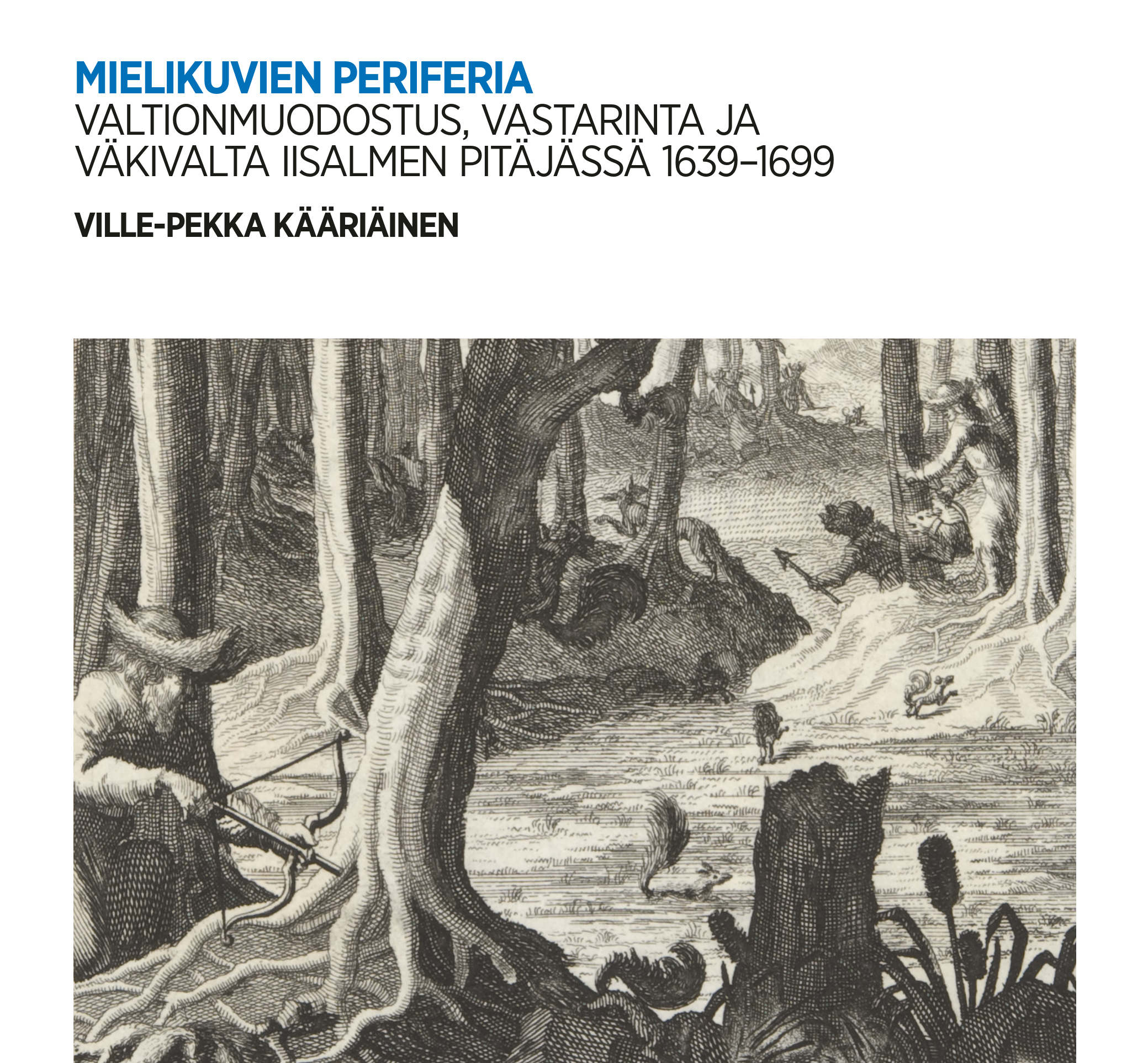 Ville-Pekka's dissertation shed new light on state formation in Finland. © Ville-Pekka Kääriäinen
Having experienced the difficulties of reading historical documents in his own research, Ville-Pekka decided to create a course teaching students about automatic text recognition. "I believe that the study of earlier periods suffers partly because many find the sources simply too challenging to read, [...] so I feel strongly that all tools that help students master old handwriting are welcome."
When putting together the course outline, Ville-Pekka focused on the skills the students would need to carry out their research using automatic text recognition. "In the course, we go through the basic functions of Transkribus," Ville-Pekka explained. "We work with different types of materials, and students receive homework assignments where they transcribe historical documents using Transkribus." Although the focus is mainly on early modern documents, students get practice with many kinds of handwriting, from the 20th century back to the 16th. “Students are usually pleased that the course gives them hands-on access to real historical materials."
But learning how to use Transkribus is just one part of the process. Historical document analysis requires a multitude of skills, which are also covered in the course. "Alongside handwriting itself, we practise interpreting historical documents and applying source criticism. We also practise traditional reading of sources, which is a core skill for historians."
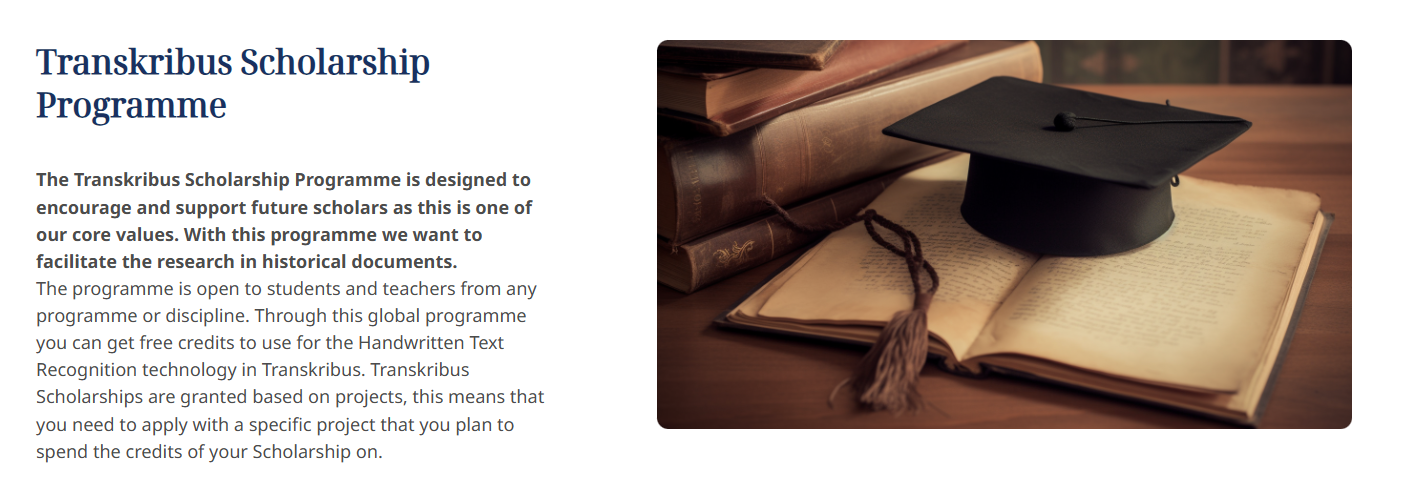 The Transkribus Scholarship provides students and teachers with free credits for their projects and courses. © Transkribus
One major challenge when setting up a course like this is making sure that all the students have a Transkribus account and credits to use for the course. Therefore, to ensure students could easily access the platform, Ville-Pekka applied for a Transkribus Teaching Scholarship. "I have been involved with Transkribus for a long time, so I knew that from the very beginning the cooperative aimed to provide free credits for students and workshops."
"These credits have been essential for teaching. Students do not need to use their own free credits, and we can freely experiment with the capabilities of Transkribus." Transkribus also offers Student Scholarships, which students can then apply for to conduct their own research, based on what they have learnt during the course.
Unlike many courses at the University of Helsinki, this particular course is run in conjunction with the Helsinki Open University. Because of that, it has attracted a very broad range of participants. “In principle anyone can participate [...]—undergraduates, doctoral students, already-graduated scholars, genealogists, and even well-established researchers from various fields.”
This diversity has required Ville-Pekka to tailor the content of the course to suit the participants’ needs. "Students’ skill levels are often very heterogeneous: for some, learning the software takes only a moment; for others, even the basic steps can be challenging,” he explained. “It helps to narrate aloud which key you press for each operation and to assist individually when needed. Small details often make the experience smoother: a highlighted mouse cursor for the instructor, students bringing their own mice, registering in advance, and documentation with clearly assigned pages for each participant.”
.png?width=1911&height=897&name=Autumn%20Court%20Session%20of%201640%2c%20Iisalmi%20Court%20District%20(Transkribus).png) The course teaches students how to create accurate transcriptions of historical documents using Transkribus. © Ville-Pekka Kääriäinen
The course teaches students how to create accurate transcriptions of historical documents using Transkribus. © Ville-Pekka Kääriäinen
While the course is a relatively new addition, the feedback has already been generally positive. “Some students have grown very fond of Transkribus and plan to continue using it, while others prefer more traditional methods,” Ville-Pekka said. “I emphasise that no one is required to adopt [handwritten text recognition], but understanding the technology and its benefits is part of contemporary historical research.”
And it is this point that makes university courses like this one so vital. Creating digitised and machine-readable collections is an increasingly common goal among research and memory institutions, particularly in Finland, but it can only be realised by people with the right skills in documentation processing and model training. “[Text recognition] technology can only advance through high-quality models, and without better models we will never reach the goals set for digitalisation.”
Thank you Ville-Pekka for taking the time to talk to us!