Research
Text recognition models

Not all AI is created equal, and handwritten historical documents are where the difference shows. That was the idea behind the Transkribus User Conference 2026, which brought around 500 users together in September, in person at the University of Passau and online.
They ranged from national archives digitising millions of pages to PhD projects built around a single diary. But they shared one question: as general-purpose AI moves into their field, which tools can they actually rely on?
This recap covers what the keynotes had to say, a few examples of what the community presented, and what's next for Transkribus, including the new Smart Extract models.
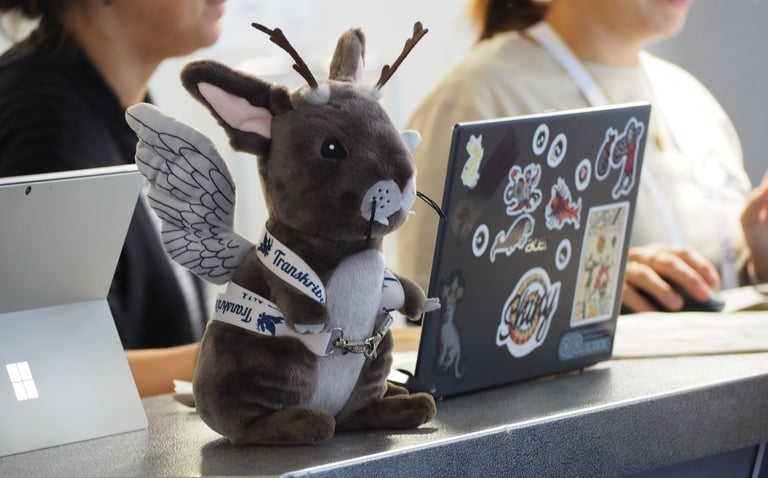
TUC26 info desk, Transkribus User Conference 2026
General-purpose AI models are moving fast into handwritten historical documents, a field that has long rewarded specialised tools. So the question at TUC 2026 wasn't whether to use AI, but which AI, for which documents.
The READ-COOP board opened the conference with the State of Transkribus, an honest stocktake of the past year. They looked back on what shaped the platform and how the cooperative and its membership have grown, then turned to the bigger question: where does Transkribus stand as general-purpose models push into a field that has long rewarded specialised ones?
Their answer to the question: it isn't either/or. Transkribus relies on specialised models where historical handwriting demands them, and brings in general-purpose AI where it genuinely helps. The two keynotes then tested each side of that answer.
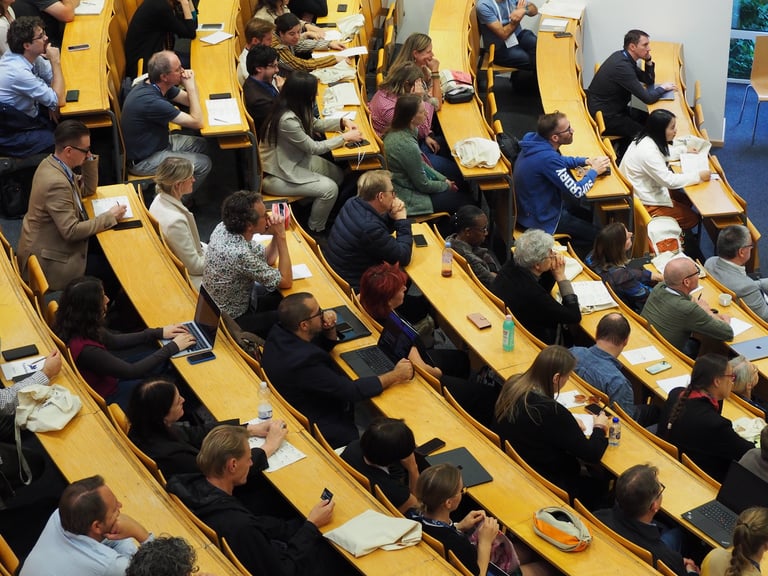 TUC26 audience at University of Passau, Transkribus User Conference 2026
In her keynote, Alíz Horváth (Central European University, Vienna) made the case for specialisation through language. Most languages, especially those written in non-Latin scripts, are still underrepresented and under-resourced in digital humanities. For researchers working with those sources, a model trained mostly on a handful of major languages simply isn't good enough. Equal access to digital tools, she argued, depends on language diversity, and on the models and communities that support it.
Vincent Christlein (Friedrich-Alexander-Universität Erlangen-Nürnberg) came at the question from the other side and looked at what general-purpose AI can actually do. He presented recent work running lightweight visual language models on historical archives and complex structured documents, where the same problems surfaced again and again: reading order, hallucinations, sticking to a required format, and a gap between benchmark scores and real-world use. His conclusion echoed the board's: better document understanding may come less from bigger models and more from hybrid pipelines that combine approaches.
Over the following days, sessions on minority scripts and multi-alphabet sources, benchmarking at scale, archival pipelines and community-driven work kept returning to the same point: the right AI depends on the document in front of you.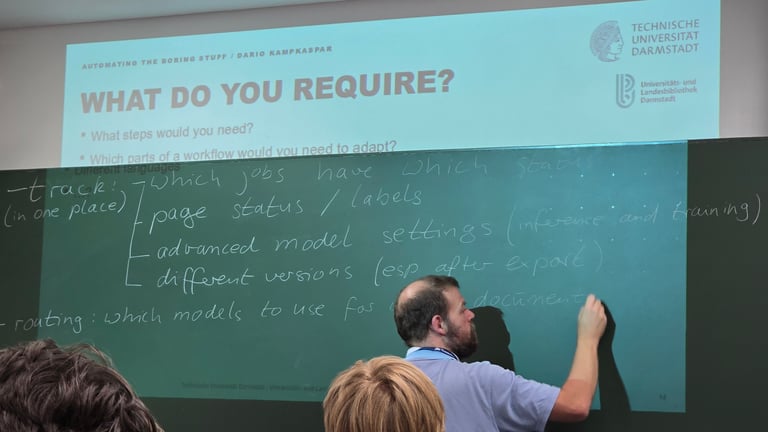
Automating the Boring Stuff - Workshop by Dario Kampkaspar, Transkribus User Conference 2026
The keynotes set out the big picture; the community showed what it looks like in practice.
With over 150 speakers, the programme ran from rare scripts to large-scale data projects. The three below are just a few examples among many, but together they show some of that range: a low-resource language getting its own models, an archive testing LLMs on its records, and a society magazine being turned into data.
The other lightning talks and scholarship presentations are waiting for you on our YouTube channel, with more being added soon.
All these talks and presentations are also a glimpse of where Transkribus itself is heading: from the page straight to structured data. But of course, some of the best conversations happened between sessions: over coffee, at the poster exhibition and during the conference dinner cruise.
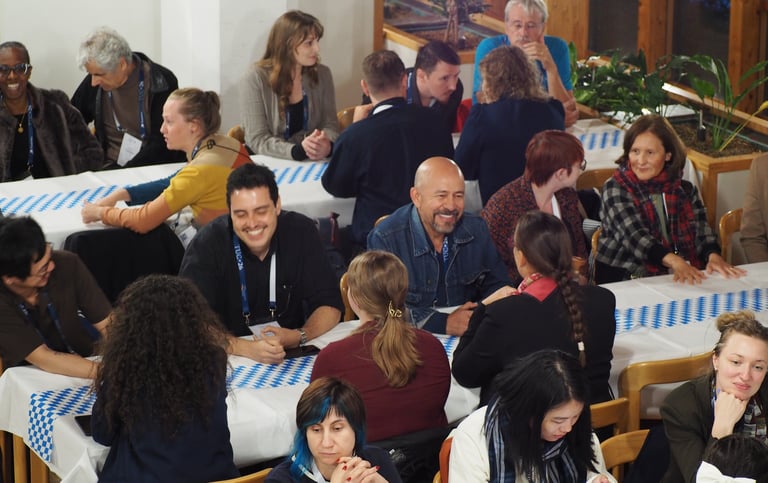
Oktoberfest Reception, Transkribus User Conference 2026
Alongside the main theme, another question came up more and more often: what comes after the transcript? For many projects, getting the text off the page is no longer the hard part. What they need next is to find people, places and dates across a whole collection, turn tables and registers into usable data, and make their archives searchable for others.
Both questions came together in The Road Ahead, the closing session on the final afternoon. There, the READ-COOP board (Annemieke Romein, Florian Stauder, Michaela Prien, Andy Stauder and Melissa Terras) set out where Transkribus is heading.
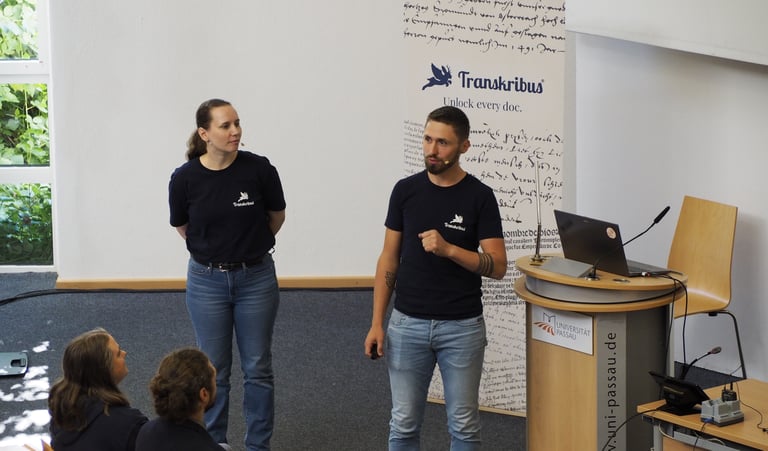
Co-executive directors Michaela Prien and Florian Stauder, Transkribus User Conference 2026
When it comes to choosing the right AI, Transkribus combines the strengths of both. Historical handwriting brings problems that general-purpose language models often still struggle with: unfamiliar scripts, irregular layouts, abbreviations and the risk of confident-sounding errors. Specialised models trained on historical documents solve many of these. At the same time, we're integrating LLMs into Transkribus wherever they genuinely help.
For what comes after the transcript, the board closed with an announcement: Smart Extract models are coming to Transkribus. They transcribe your documents and pull out names, dates, places and other structured data in a single step, building on the tagging and data extraction tools Transkribus already offers. It's specialised AI aimed at exactly the next step so many projects are now facing.
Curious what Smart Extract can do with your documents? The first pre-trained Smart Extract model, Atlas, is already available in beta.
If TUC 2026 showed one thing, it's that the community isn't waiting for general-purpose AI to figure out historical documents on its own. From Classical Nahuatl to Viennese society pages, you're already building the specialised tools that make the difference.
Thank you to every speaker, workshop trainer, poster presenter and attendee, to the entire team and to the University of Passau for making TUC 2026 possible! We can't wait to see what you are working on next, and to hear all about it when we meet again.
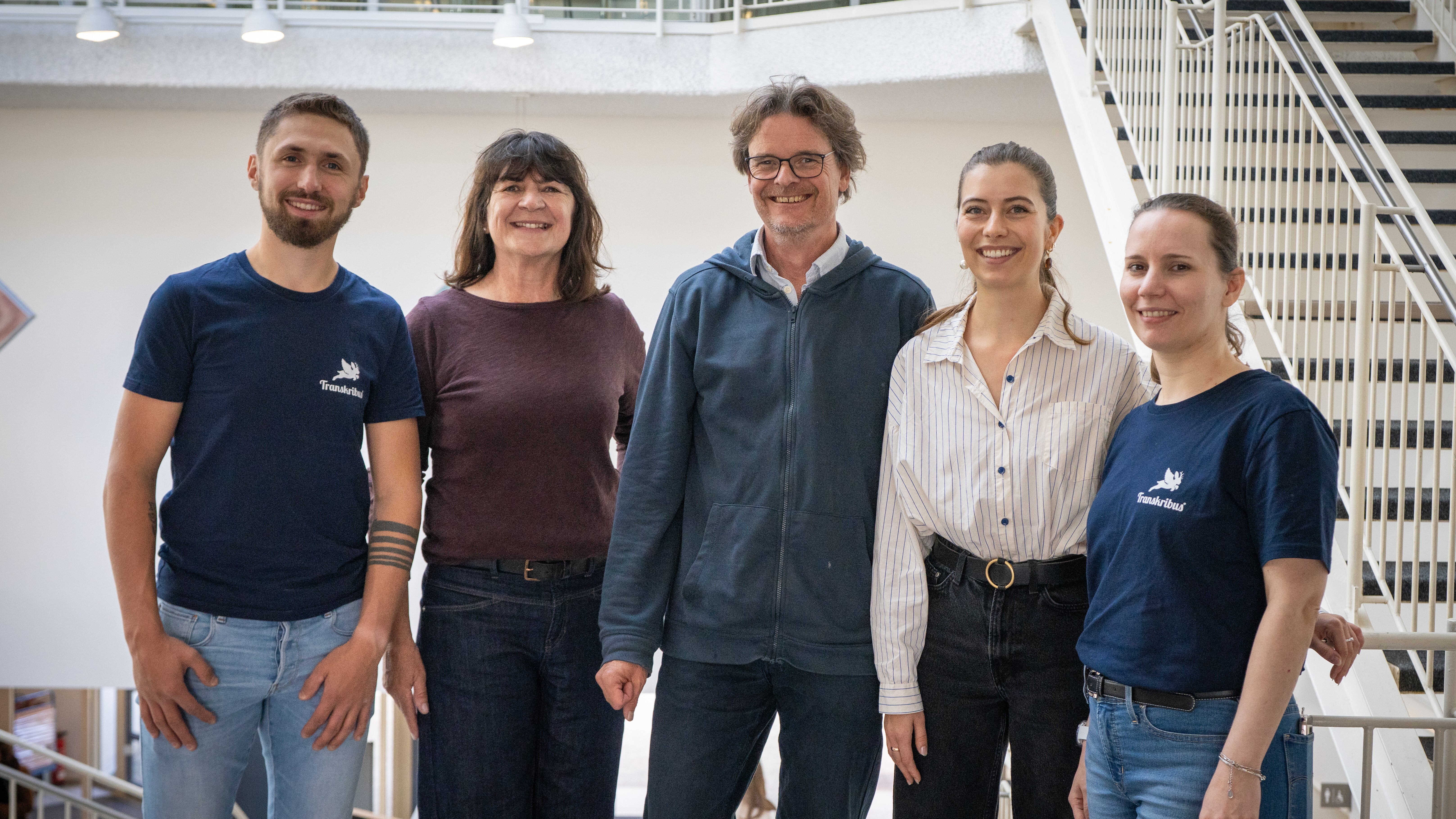
TUC26 conference planning team: Florian Stauder, Heidi Riederer, Malte Rehbein, Helene Prokop, Michaela Prien